Different or the Same

Sometimes being different is all about being the same. Take the state of South Australia for instance. Not too far, I hear they like where they are. They’re rolling out a program to connect all the public libraries on the one library system with all the punters using the same card. Here is the news item: http://www.libraries.sa.gov.au/site/page.cfm?u=499

So it might take three years, but it’ll connect almost a million SA residents with nearly five million items across more than 130 libraries and they’ll soon be three years ahead of the rest of us. It is more than time we looked at doing this as a nation. If we were as clever as we think we are, we’d have done it ages ago.

Thanks to @edwardshaddow (from WA) for alerting me to this.

Discuss.

Shelf Life & The Usefulness of Useless Knowledge

I’ve reblogged this from a post I did here: http://informationonline2013.wordpress.com/2012/08/01/shelf-life-the-usefulness-of-useless-knowledge/ 

I’m on the program committee for Information ONLINE 2013. Kate Davis dobbed me in. Currently we are still trying to tie down keynotes so we can tell you who they are. One thing I am allowed to say is that they’ll be different.

We’ve all been asked to keep this blog alive on a regular basis, so this is my first post. I think my theme will be posts about being a bit different. Then again, I reserve the right to change my mind at any stage.

Anywho, on with the post, so here we go, mind the step. I saw this on Zite over the last weekend and loved it: http://www.brainpickings.org/index.php/2012/07/27/the-usefulness-of-useless-knowledge/

I think it very nicely encapsulates a lot of our recent initiatives to deepen the impact of the Library within our community (at UTS). In many ways, if we are successful at this we build a more relevant institution for the future that helps to distinguish this University from the providers of online course materials. It is useful to look at some of the ideas raised by Abraham Flexner and why I think they are even more relevant in today’s fast-paced and really dynamic online world. Here are a few quotes from the article that I found really inspiring, (but please try to read the full post):

this dangerous tendency to forgo pure curiosity in favor of pragmatism

Now I sometimes wonder whether that current has not become too strong and whether there would be sufficient opportunity for a full life if the world were emptied of some of the useless things that give it spiritual significance; in other words, whether our conception of what is useful may not have become too narrow to be adequate to the roaming and capricious possibilities of the human spirit.

… the really great discoveries which had ultimately proved to be beneficial to mankind had been made by men and women who were driven not by the desire to be useful but merely the desire to satisfy their curiosity.

Institutions of learning should be devoted to the cultivation of curiosity …

Out of this useless activity there come discoveries which may well prove of infinitely more importance to the human mind and to the human spirit than the accomplishment of the useful ends for which the schools were founded.

Justification of spiritual freedom goes, however, much farther than originality whether in the realm of science or humanism, for it implies tolerance throughout the range of human dissimilarities.

On 1 August 2012 our first Artist-in-Residence, Chris Gaul, opened his Shelf Life exhibition in the DAB LAB Research Gallery. I think Abraham and Chris would get on swimmingly. Chris has helped us to understand beyond what we know, he has given us fresh new perspectives on our challenges and presented us with stimulating original ideas to encourage the curiosity of our clients.


Shelf Life displays a few concepts for very different methods of discovery as we prepare to store up to 80% of our physical collection in an underground automated retrieval system that will be adjacent to a new and relocated library on Broadway, in the middle of our redeveloped campus. Chris recognises that in this brave new environment the nature of online interfaces for exploring the collection and browsing books becomes even more relevant. Rather than being sterile and uninspiring, these interfaces can be creative, unexpected tools that encourage playful exploration and serendipitous discovery. As Chris writes:

What if you could wear a pair of headphones and wander library shelves listening to the babble of books reading themselves aloud? What if you could tune into different frequencies of books, or use their Dewey call numbers to call them on the telephone?

Image
That’s all!

P.S. I went back and bolded the quote I used at the launch of Shelf Life. It really is amazing stuff, so if you’re in Sydney come and have a look. If not, we agreed to document the three concepts by video so everyone can se how they work when used. MMB

Responses to the UK Finch Report on Open Access research publication

By now many of you will have heard reports of the Finch Group Report (released 18 June) on expanding access to the publication of publicly funded research in the UK. Essentially, whilst recommending that such research be made freely available on Open Access (OA), it also rather weirdly suggests that it be done under so-called Gold OA arrangements, recommending that publisher revenue be switched from library subscription fees (as it is now) to author fees (or “article processing charges”). This is plainly a ridiculous and unworkable recommendation that has been heavily influenced by the publishers lobby.
You may care to read some decent responses to the report here:
David Price: Vice-Provost (Research) at University College London http://poynder.blogspot.com.au/2012/06/finch-report-ucls-david-price-responds.html
I follow @openaccess_oz on Twitter to keep up with this.
There is movement at the station … (finally)

Shapeshifters: the new creatives

Last night I went to the UTSpeaks event called Shapeshifters. I’ve been engaging with all of the speakers for some time now, but I still heard some useful and stimulating advice from them at this talk. So here are the thoughts that I noted during the event:

First up was Professor Kees Dorst. He said that after years of research into the processes used by the world’s great designers that he has found that expert design behaviour centres around frame creation. Apparently good designers focus on the problem through frame creation. He says the process moves through these stages or phases: Archaeology (gaining a deep understanding of the problem); Paradox; Stakeholders; Problem arena; Themes; Frames; Futures; Transformations; and Connections.

His research led to UTS establishing a Designing Out Crime (DOC) research centre.  Frame creation is at basis of all DOC projects. For example to tackle traffic congestion problems during the Marathon in Eindhoven, DOC started with analysis of the environment and the participants. They widened problem and enriched it to solve it. They mapped all participants, gathered data and mapped the city. This resulted in spreading people all over city according to their interests to solve traffic problem but also much more.

Second to speak was Dr Jochen Schweitzer. He first stressed the need for UTS to graduate more entrepreneurs. To do that we need to provide students with opportunities to test ideas. He also said we should be in the business of surprising customers (I like this idea A LOT).  He went on to point out that innovation is held back by homogenous or non-diverse groups of people (ring any bells?) and said that a common language is needed for design (from designers) and that we need to use it more.

Dr Joanne Jakovich was the last speaker. She also gave some background on her work as a designer and researcher and then talked about her recent experience with u.lab.  She said that u.lab provided a playful creative space for an open design process, allowing for deep understanding from observation. U.lab practices iteration, failing, sharing, prototyping and doing (not just talking). She stressed the importance of initiatives like BikeTank that make connections to rediscover the innate creativity in all of us as a function of our capacity for shared humanity. BikeTank was aimed at making cities more human and she said that cities desperately needed innovation via collective creativity.

Joanne then gave us her 10 point manifesto:

  1. Encourage creative collectivism 
  2. Love the city 
  3. Action first then stewardship 
  4. Use creative altruism 
  5. Reverse engineer the emotional experience of innovation (what makes people really join in and contribute?) 
  6. Raise the bar of creative expression however you can (e.g. bribes and creating the best environment for it) 
  7. Orchestrate extraordinary experiences (I love this!) 
  8. Good ideas scale when dead 
  9. Foster everyday entrepreneurship 
  10. We must tap into diversity in our urban being 

In response to a question after the talks Kees said that after tapping into the top level layer of design knowledge he found that the things creative leaders do best is to create an environment in which creativity is encouraged, allowed and recognized. Leaders also need to market and communicate about that, at least in part for their internal audience.

2011 Music (post 3 of 4)

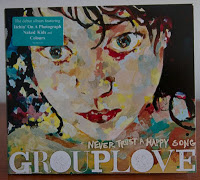
Grouplove: Never Trust a Happy Song.
*****
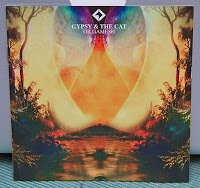
Gypsy & The Cat: Gilgamesh.
****

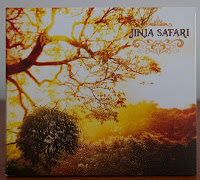
Jinja Safari (EP).
****

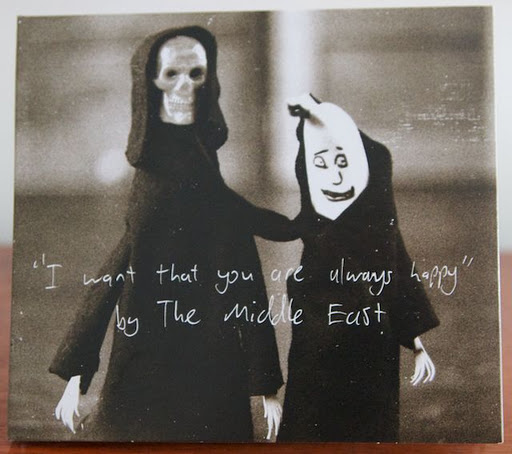
The Middle East: I want that you are always happy.
****

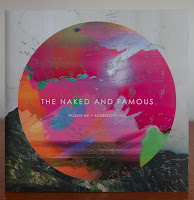
The Naked and Famous: Passive Me, Aggressive You.
****

Grouplove: They play happy music and I always trust happy music. I absolutely love this album and was lucky enough to see them in a smallish Sydney venue live in mid-2011. They’re brilliant, new, original, enjoy playing together and just so enthusiastic about their music. So much energy they just make you want to jump about or thump something in time with their beat! I love the clapping, the guitars, the teeth, the hair, the vocals, the stomping, the screaming and the words. They are like crazy animals released live on stage. It is all good. The first song I heard was Colours and I knew I would love whatever they did. Then I was wild for Naked Kids and soon came Itchin’ On a Photograph and its brilliant video and I especially love Andrew Wessen’s guitar work right at the end of the song. I also love his vocals and ukelele playing on Spun. Love Will Save Your Soul is another powerful song backed by guitar work that I find addictive. Hannah Hooper painted the art work on the album cover. Her vocals are wonderful. They have it. They use it. They do it.
Dancing, California, Rock, Fun, Energy, Pace.

Gypsy & The Cat: Yeah, so they unashamedly echo the soft rock of the 80s like Boston and Toto, but I like this album more than the original tunes that might have inspired them. There are a good number of instantly likeable tunes and the hit tune Time to Wander had a fantastic music video set outside the Tate Modern staring Art Malik that just mesmerised me. I don’t really like Jona Vark, but others like The Piper’s Song, Parallel Universe and Breakaway are great.
80s, Pop, Tate Modern, Dancing.

Jinja Safari (EP): I was really into Peter Pan in late 2010, but I think that I didn’t buy this EP until 2011 and I’m including it in this list because I think the real highlight on the EP is the haunting Stepping Stones. It is a very beautiful song and entirely under-rated. Their music reminds me of Yes. MGMT and Fleet Foxes. An odd mix, I know.
Hippies, Happiness, Dancing, Jumping, Bush.

The Middle East: They are very hard to label but I think they have an alternative folk rock sound not unlike Fleet Foxes for the most part and I like them a lot. It is a pity that this is their second and last album. I was lucky enough to see and hear them perform live at the Metro soon after the release of this album and they’re even better live. Their live performance is much stronger and more energetic than the finessed studio production of this album. I really like Hunger Song and The Land of the Bloody Unknown. I still cannot believe that this band came out of Townsville. Some of their music is truly beautiful.
Bush, Australia, Country, Driving, Sadness.

The Naked and Famous: This is another electro-pop album that I love with many great and varied tracks. It deservedly scored 8/10 from an NME review. They’re from New Zealand and their music is instantly engaging. Young Blood certainly is a highlight and an obvious single, but so too are Punching in  Dream,  Eyes, the fascinating Jilted Lovers and All Of This. On some of those tracks you almost cannot tell it is the same band. I’d love to see them live. For most of their music you just cannot sit still. It just makes you want to get up and start stomping and jumping around.
80s, Pop, Energy, Darkness, Parties.

2011 Music (post 2 of 4)

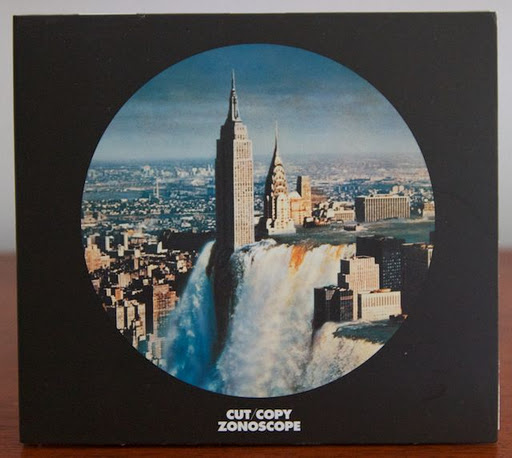
Cut Copy: Zonoscope.
****
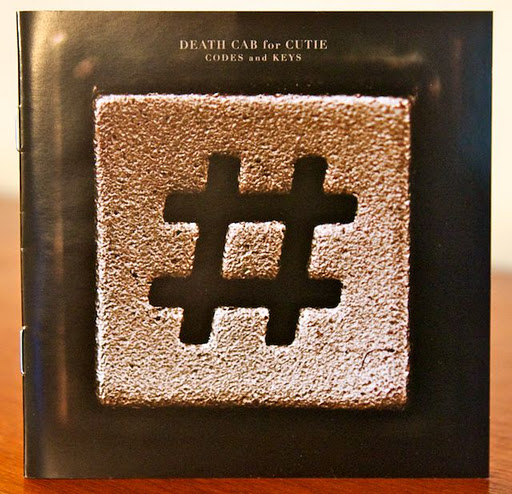
Death Cab for Cutie: Codes And Keys.
****
Digitalism: I Love You, Dude.
***
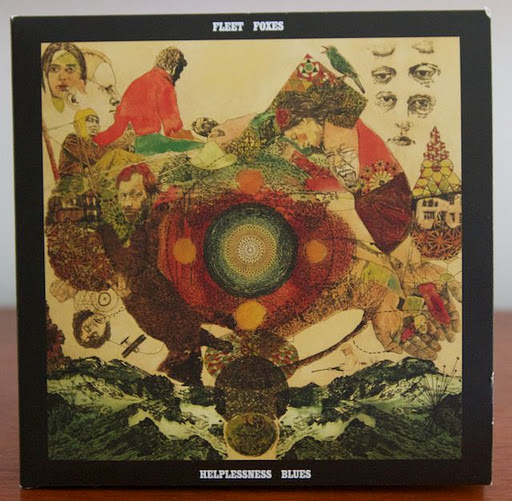
Fleet Foxes: Helplessness Blues.
*****
Gotye: Like Drawing Blood.
*

So, the second post …

Cut Copy: This is nearly a *****. Just off it really. I was lucky enough to see them live in June and I think they’re brilliant. As soon as they started playing nearly everyone at the Sydney Opera House was out of their seats dancing. The album is great, but if I stick strictly with my rating system there are a couple of annoying tracks, so it becomes a ****. I was so glad that they are fantastic live and good entertainers as well as good in the studio. My highlights are Dan Whitford (especially the way he moves on stage), Need You Now and Where I’m Going.  
Dance. Electronics. Design. Escape. Movement.


Death Cab For Cutie: Another good album panned on Pitchfork. I hadn’t really been a fan, but I bought this album for the single You Are a Tourist which I thought had a stunning music video. It was shot live in one take using multiple camera and without any editing or re-takes. I love it. I shoved a few of the tracks onto an iPod that I use when walking, running or at the gym and it has really grown on me as an album. Unobstructed Views is probably too long for release as a single, but I really like the way it gently introduces you to its theme and how Ben Gibbard’s echo-ey vocals come in late. They hold back. It is good.  There is some great guitar band work on many tracks too. There are some parallels with Cut Copy here and I see Cut Copy have remixed the track Doors Unlocked and Open on the remixed EP.
Experience. Guitars. Unique vocals.


Digitalism: Unfairly dismissed as a “rehash” by Pitchfork, this is a good album. If you like Electronica, the album has more than a few tracks that soon grow on you like Circles, Blitz and Stratosphere, but my fave is Two Hearts.
Germany. New media. Youth. Gay.


Fleet Foxes: I don’t know why it has taken me so long to get into Fleet Foxes, but I love them. They remind me of The Middle East, but it should be the reverse. I like Robin Pecknold’s lyrics and his vocals, I like the stomping beat on Battery Kinzle and I like the gentle and the strumming guitar, the harmonies, the fiddle, the mandolin and the lap steel. Helplessness Blues is an instantly loveable track. The composition is genius. The transition in tempo and feeling just after half-way is beautiful and breath-taking. They are another band that remind me of all of the best things about the US. Another really beautiful track is Lorelai and I love the different infectious feel and rhythmic pulse of Great Ocean. They have a big and devoted following, but it seems to me that they play music that they love playing together regardless of what anyone else thinks. And that is a good thing.
The US. Grass. Roots. Country. Life.


Gotye: I have no idea what everyone raves about. It is one for my sister I’m afraid. To me it seems like he is trying to prove how versatile and talented he is in many genres. Maybe he thinks he is another Rufus Wainwright?
Nothing nice springs to mind.

2011 Music (post 1 of 4)

Bag Raiders.
***
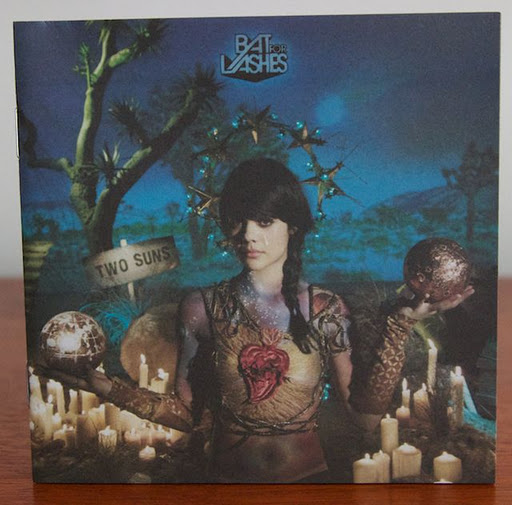
Bat for Lashes: Two suns.
***
Bon Iver: Bon Iver.
*****
Boy & Bear: Moonfire.
***
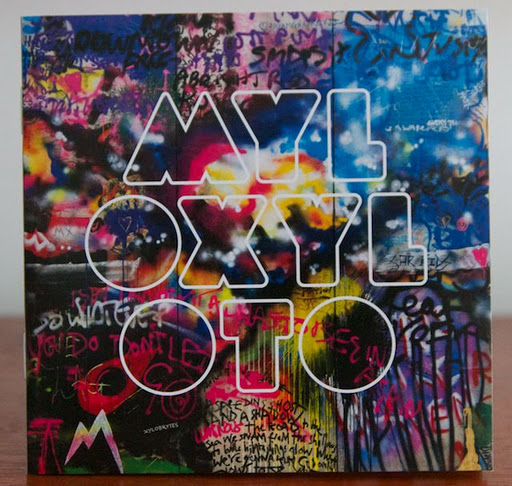
Coldplay: Mylo Xyloto.
*****

My semi-annual review of the musics that I bought in the previous year. They were not all released in 2011, I just bought the CDs in 2011. Yes.


Bag Raiders: I was obsessed with the single Shooting Stars in 2009. I loved the way it held a lot back and the way they built up the keyboard riff. I still think it is brilliant. I bought this album because of Way Back Home and that too is brilliant. Sunlight is another excellent track.
Dancing. Marieke Hardy. Running. Sydney. Triple J. 2009.


Bat for Lashes: I am a bit late to the party here, but I went to see them/her at the Opera House in June 2011 because of the album Two Suns and wasn’t disappointed. A brilliant show and it really was fantastic live music. The highlight songs for me are Sleep Alone, Moon and Moon and Daniel.
Red. Heart. Haunting. Sometimes sad. Art.


Bon Iver: I didn’t want to buy this album. Everyone was raving about it. Now I know why. I think it is one of my faves now. Virtually every track is wonderful, if a teeny bit similar. I like Justin Vernon’s vocals but they may be not everyone’s taste. I hear echoes and strains of Peter Broderick, Sufjan Stevens and Bruce Hornsby (particularly on Beth/Rest) here. The music does remind me of America, particularly of the first time I flew across the Rockies and the Grand Canyon in the 1980s, listening to Bruce Hornsby on a Walkman. It is pretty rare when I can say that I like every track on an album and I do here.
Soft. Emotions. The US. Rockies. Grand Canyon.


Boy & Bear: This was a late purchase. Maybe I shouldn’t be reviewing it yet as I’ve not listened to it enough. Some tracks are brilliant though and it is obvious that the band is both very talented and modest. I liked the list they put together for Rage one night and what they had to say to introduce some of the artists and songs that inspire them. Feeding Line is an obvious single, but there are other great tracks like Milk & Sticks (which has a great change of tempo) and Lordy May.
Ireland. The bush. Tempo.


Coldplay: I’ve been a fan since Parachutes. They seem to polarize people and many think it is cool to hate them. I don’t know why. Triple J are too cool for Coldplay, but most of their dead-head presenters probably secretly wish they were as cool as Chris Martin. I don’t think Chris is up himself at all; I think he is just tired of lame questions from even lamer DJs and VJs. Mylo Xyloto is a brilliant album: the kind of album most professional musicians wish they could put together. It will long be remembered after most contemporary music is simply forgotten. The class of production (by Markus Dravs, Daniel Green and Rik Simpson) is so far above the rest that it reminds me of the brilliance of Phil Spector at the height of his talent. I think the influence of Brian Eno is still evident too. I love Paradise and Every Teardrop is a Waterfall. Both are anthemic, dramatic, beautifully composed and typically Coldplay. Once again I like every track and with Coldplay, there is a little surprise on each track that is a joy to unpack. I don’t know how they do it.
Lights. Drama. Genius. Completeness. Entertainment. English rock. Music.

Oh, just to explain my five * rating system:
***** rare, love the whole album, genius or bordering on genius, never tire of it.
**** mostly loved, only have to skip a few tracks, nearly great.
*** has a few great tracks that I love.
** either disappointing or not to my taste.
* wish I didn’t buy it; may give it to my sister.

Another new/old bike


Latest addition. It’s a 26 year old Hillman road bike with Reynolds 531 tubes rebuilt as a single speed at Deus Cycleworks. It was my first race bike.

It is kinda an eclectic mix. The big White Industries hubs provide a lot of bling, so it isn’t all black. And they nicely match the breaking surface of the Mavic rims. I am struggling up steep hills in Sydney from a standing start, so either they have too big a gear on it or I’ve been spoilt recently by all the gears on my Bianchi & Pinarello road bikes. If I get the old Allsopp fixed I’ll almost have a different bike to ride every day of the working week. It has a gold chain because they didn’t have a decent black chain in stock. Looks OK. And it still seems like a nice fit to ride.

I just have to ride with a pump, even if it is only a few km. All those years on long rides I guess. Not that I can remember them at all really. Must have been someone else …