
Category: Cultural institutions
“Prisoners of War: Australians Under Nippon” by Hank Nelson
More reading for Anzac Day …
This 1985 publication is based on an award winning ABC Radio series of the same name that was first broadcast in 1984. It was presented by Tim Bowden, AM (war correspondent, journalist, broadcaster, documentarian, author and oral historian) and Hank Nelson, AM (historian, author, mentor and ANU Professor). I listened to that series week-by-week, on Saturdays as I remember, because I was named after Dad’s older brother who was killed as a POW when the Japanese ship the Rakuyō Maru, transporting over 1,000 Australian and British POWs back to Japan, was torpedoed by the USS Sealion II in September 1944. My family would never tell me much about my uncle’s tragic experience as a POW when I asked and this radio series and book helped me to understand why. They simply did not know. Some earlier accounts had been published, such as Russell Braddon’s “The Naked Island”, but I think this broadcast and publication really helped us to understand the experience of those POWs because it was made at a time when so many ex-prisoners were finally more willing to talk about their incarceration. That the stories were brought to life is also not least down to the skill of both Tim and Hank.
The book is quite simply full of almost unimaginable memories of endurance, mateship, courage, compassion, humour and the most beastly brutality. It begins with the fall of Singapore in February 1942, and then covers life in Changi, the infamous Thai-Burma railway, the capture of Australian Army Nurses, the decimation of ‘Gull Force’ on Ambon, the atrocities committed on Borneo and the Sandakan death march, escape and evasion attempts, forced repatriation of some POWs to slave labour Japan, the severity of punishments handed out in Outram Rd prison in Singapore, survival and eventual freedom and the legacy of wounded minds.
Now that the 16 parts of the series are available for download, I think that it is best to take the opportunity to listen their voices and then read their words, perhaps chapter-by-chapter. Together, the program and the book bring to life the experiences of many memorable prisoners such as Stan Arneil, George Aspinall, Keith Botterill, Vivian Bullwinkel, Dr Kevin Fagan, Don Moore, Ray Parkin and Snow Peat.

A George Aspinall photograph of three “fit” workers on a camp on the Burma Thai Railway: https://www.awm.gov.au/collection/P02569.192
Nearly all ex-POWs would have passed now, but I had the opportunity to meet and talk with some while I was working at the Australian War Memorial. It always amazed me that so many went on to lead healthy, productive and reasonably long lives knowing what they endured and also what they went without for so many years as POWs. I think it would’ve been around 2004 that several ex-prisoners tracked me down at the Memorial and asked if I was related to a mate of theirs (they had enlisted, served and been captured in 1942 with my uncle). They were all in their 80s or 90s by then and I got to know them all. They marched together every Anzac Day in Sydney and had all survived the sinking of the Rakuyō Maru in 1944. They asked me if they could meet with my father and I remember getting them all together one Saturday morning in West Ryde at one of their homes. After all those years they had managed to track me down and finally my father and I knew what had happened to his brother so many years ago. For me it was just like meeting many of those who told their stories to Tim and Hank.
The Broken Years

Image source: https://www.awm.gov.au/collection/P04604.016
Dr Bill Gammage AM, FASSA is an academic historian who wrote The Broken Years based on his PhD thesis at the ANU. First published in 1974 it tells the story of Australia’s involvement in the First World War through the private records created by a thousand Australian soldiers in their diaries and letters home.
At that time Bill was still able to correspond with some veterans of the Great War and he also skilfully selected records that were mostly collected by the Australian War Memorial (AWM) in the 1920s and 1930s and ties them together to form a chronological story from 1914-1918, covering campaigns in Gallipoli (ANZAC), Egypt, Palestine and France.
I first read this book back in the late 1970s whilst training at RMC Duntroon and studying military history. It had an enormous impact on my attitude to war and made me fully aware of the awful realities, well beyond what I had heard from veterans, or seen in movies or on TV. I think the power of this book comes from the voices of those who served, who tell their own stories so powerfully. As the cover of the book notes, it is both a horrifying and emotionally moving account. What Bill Gammage does in The Broken Years is demonstrate the enormous importance and power of those archival collections at the AWM and he also highlights the vision of the historians, librarians, and archivists who created them so many years ago.
It is also worth noting that Bill Gammage is a highly respected historian and that he revived the tradition of Dr C.E.W. Bean, the official Australian historian of the First World War who focussed his story on the experiences of those who served rather than the battlefield strategies. Bean was also the founder of the AWM. Bill was later employed by Peter Weir as the military advisor for the film Gallipoli.
Bill’s book also seems to have had a not insignificant influence on at least part of my working life. I did not spend that long in the Army after graduating from Duntroon. I had a number of career changes and then somehow managed to wind up at the AWM as Head of their Research Centre (library and archive) in 2001. I was privileged to be responsible for the collections that this book was based upon and also for managing the addition of names to our Roll of Honour as we were again at war in the Middle East.
The critical thing with archival collections is that one must not just concentrate on preserving, cataloguing and exhibiting or providing access to what is already there. Those collections need to be developed as time marches on. With my curatorial colleagues at the AWM in the early 2000s, we soon realised that we faced new challenges in order to do what the AWM had done in the 1920s and 1930s to collect contemporary records of war – in the form of both official accounts (like unit war diaries) and private records in the digital age. We soon began asking to make curatorial visits to war zones to see what was being created for ourselves and to tag or collect what the AWM would need for future exhibitions and research into the conflicts that were still being waged. This started to happen from about 2007-2008. A colleague visited Iraq to mark and collect military technology and paraphernalia and then in late 2008 I was sent to Iraq (Baghdad) and out to sea with the RAN in the Northern Arabian Gulf to collect war records before our forces withdrew from Iraq. I was able to mark or tag some items such as map collections and official records, find out how people were corresponding or keeping diaries, made many photographs and recorded oral histories for the AWM collections. I left the AWM for UTS Library in 2009, but those AWM curatorial visits to war zones have continued in places such as Afghanistan ever since.
The Broken Years will be part of our featured book display at UTS Library for ANZAC Day 2017. I am not aware of any volume like this that has been written about any conflict after the First World War, so it is still unique. As a librarian, curator and collection manager I think it reminds us of the important and continuing role of archives and collecting institutions to preserve public knowledge, even as formats change.
Talk on Battle of Coral prior to ANZAC Day 2017
Nearly 50 years ago, in May/June 1968 Australian soldiers fought their largest, most sustained and arguably most hazardous battles of the Vietnam War. Units of the 1st Australian Task Force (1ATF) confronted regimental-sized formations of the North Vietnamese regular army in fierce actions around Fire Support Patrol Bases (FSPB) Coral and Balmoral in what was then known as Bien Hoa province. The location of FSPBs Coral and Balmoral are marked by blue symbols on this satellite map.
The first of the battles occurred at FSPB Coral when massed enemy units attacked the base in the early hours of 13 May 1968. Australian units withstood heavy enemy attacks against their hastily prepared position during which a mortar platoon and two gun positions were partly over-run.

The Australians drove off the enemy after fierce close-quarter actions. The battle lasted over two hours. The task force suffered 11 killed in action and 28 wounded. In one mortar platoon five soldiers were killed and eight were wounded from a total strength of 18 men. One howitzer and two mortars were damaged. The enemy left 52 dead strewn throughout and around the fire support base.
On the Friday before ANZAC Day UTS Library will host a lunchtime presentation by two participants from that battle Ian “Scrubber” Ahearn who as a young Lieutenant was the Gun Position Officer for 102 Field Battery, and Tony Jensen, also a Lieutenant at the time, who was the second-in-command of the 1st Battalion, Royal Australian Regiment, Mortar Platoon. This is a unique chance to hear from two real participants in this battle. They will use sound (music from the time) and visual imagery to tell their story. Both men have now retired from active duty in the Australian Army and are great raconteurs. Tony and Scrubber did some oral history interviews with some of those involved in this battle, such as this one with Lieutenant General Sir Donald Beaumont Dunstan (from 2007) who was in 1968 the Deputy Commander, 1st Australian Task Force (1ATF), South Vietnam.
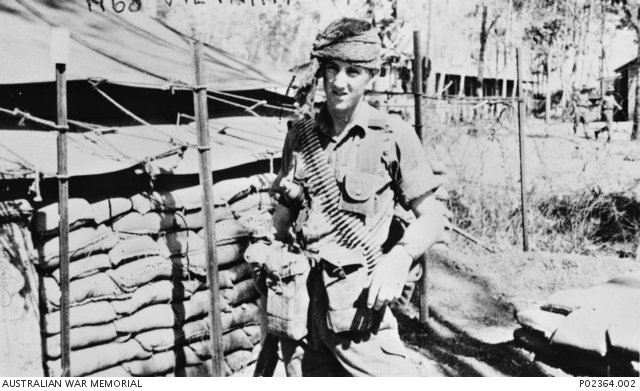
Tony and Scrubber were classmates from RMC Duntroon, graduating only 16 months before this battle in 1966, so at the time they were not much older than many of our undergraduate students at UTS. The youngest soldier on the gun position that night was Bombardier Andy Forsdike (pictured below) who was just 19 years old.
If you’d like to attend this talk, but you are not a member of the UTS community, just let me know.
On new and not so new librarians
I think “librarian” now means many different things in contemporary libraries and that outstanding future libraries will be full of a mix of professionally qualified people who bring an increasingly diverse range of skills to libraries. So, who are these additional or relatively new folk and what skills do they bring? Here are my thoughts.
- ICT programming & development skills* – needed to manage repositories of research outputs and data; data archives; discovery interfaces; many large systems peculiar to libraries (e.g. RFID, ASRS, library catalogues, search and discovery layers & so many vendors’ products – databases).
- Legal or para-legal skills** – to advise on the increasingly complex IP and Copyright environment and on the mixing/creation/reuse of licensed material by students and academics.
- UX* – to make sure we get user interfaces and services right and iterating in the right direction.
- New media skills** – to better understand its creation and to assist students and academics with its creation and this will become only more and more important, so that means people comfortable with the creation and editing of sound, film, images, games, online publications, social media, etc.
- New (online) publication skills** – for OERs, ebooks & texts, OA pubs, print-on-demand, etc.
- Design skills* – in-house as they help with all of the above; they also help with the development of a design mindset (as opposed to just plonking “good ideas” on unsuspecting punters).
- Marketing & Comms skills* – in-house as they also help market our services to our community.
- Curators & archivists* – to assist with “special” collection development, exhibitions and the very important cultural aspects of libraries.
- Conservators# – depending on scale and collection needs.
- Data Scientists (or the like) or Analysts, or “Wranglers”** (probably the most apt description) – as I think we will need a few librarians who really do understand this field and who can hold their own in environments with various data gatherers or generators like academics, students and researchers.
* Those we have already at UTS Library.
** Those we are growing or developing in-house.
# Those we don’t have or need here.
Anyone else I’ve missed or badly described?
GLAM Sector Conferences in Australia
Here are my thoughts on GLAM sector collaboration and conferences in Australia. Firstly, we should stop having so many library “conferences” every six months. There just isn’t enough interesting, new or relevant material to justify participation.
Maybe we should consider having one major library conference (run by either VALA or ALIA, or both) every second year and on the other years we get the whole GLAM sector together and ALIA, MA, ASA and anyone else (like CAUL, NSLA, etc.) cooperate to run the one Australian GLAM conference. I’ve said this for years and nobody listens. It would be a useful first step in learning from each other, collaborating and maybe even starting to have one united voice for the impact of culture in our society. Who knows, perhaps we could even make major progress on a digital strategy for the whole sector?
Great Videos from the Aspen Leadership Roundtable on Library Innovation (Pt. 1 of 2)
Over the last two days I’ve watched and noted a couple of great videos from a recent event in Aspen on Library Innovation. The two speakers were Michelle Ha Tucker from IDEO on Library Innovation By Design and John Seely Brown on Re-imagining Libraries for the C21st. I think they are both great talks and very relevant to what we are engaged in at UTS – designing a future library, its services and our future organisation. I recommend watching both videos, but for those too lazy to take notes, I’ve done that for you below, with a few of my own observations thrown in for good measure. So here we go, mind the step …
John Seely Brown (hereafter known as JSB) is talking about re-imagining public libraries in the C21st, but most of what he says can equally be applied within a university community.
He begins by saying that the challenge is not developing new ideas, but escaping old ideas. He says we face exponential advances in computational technologies that rapidly become almost irrelevant on what is now as short as an 18 month cycle. So how do we keep pace with that and plan a future library that can adapt quickly and transform as the eco-system changes?
I like the quote he uses from David Weinberger who says we live in a time of “Too big to know”. Knowledge is now in networks; topics have no boundaries and nobody agrees on anything. We must learn to deal with ambiguity in our daily lives and in learning.
We are moving from “stocks” (protected and fixed) to “flows” (tacit, created knowledge that flows and moves and this makes it much harder to capture).
Everyone now is embedded in vast networks with libraries already in or approaching a state of flux (certainly, we will be if we cannot adapt!).
So JSB sees libraries as:
- becoming hubs of communities
- making the most of digital technologies and creative media
- mentoring, connecting, guiding and curating
These are all the things we are saying about our role here in the UTS community.
We must move from “knowing” to creating and making. And the building of CONTEXT is now more important than CONTENT (collections). He says the basic architecting of context can result in amazing things. Learning how to read context is now as important as reading content. I think it comes with the environment of almost everything now being instantly available. The context helps you to navigate to what is most relevant and authentic. It also gives meaning.
He also talks about “reverse mentorship” – learning from the young(er) and I think we’ve done a fair bit of that over the last several years here, by empowering relatively junior staff and by hiring current or recently graduated students. They helped those of us who are not so young and who were trained and qualified well before this networked world understand the potential of new technologies and how these networks work best.
The importance of play is also stressed as this helps us to push boundaries and with the invention of things within spaces of rules. Play also helps us to unlearn and this too is critical.
He talks of the critical nature of IMAGINATION | CURIOSITY | AGENCY (or having some effect in the world). These are very important for libraries to understand. I’ve been saying for some time now that libraries need to understand discovery as well as search (they are quite different) and now I am suggesting that a major role for all libraries is in encouraging curiosity. Agency is something we’ve only just started to understand, but I’ve seen enough hints and mentions to realise that it too is important for us.
Now there is also networked imagination and JSB cites the example of communities playing WoW in which teams from across the world share their actions and plans in imagined connections. He also cites the example of Harry Potter fans doing amazing things with civic imagination behind the stories and achieving results in the less developed world accordingly.
Henry Jenkins talks of a global collective that students are used to creating (in their networks) that is intertwined within a networked imagination and asks us whether we are prepared for this? If not, we risk becoming irrelevant. Transmedia is very important in all of this.
The key challenges for us:
- Expanding the notion of literacy to include the visual, musical, procedural and cinematic
- Understanding that yesterday’s cutting edge is today’s dustbin – this is a big challenge for CAPEX and OPEX investment and also for staffing. He thinks we need a VISION that transforms and an evolving tool set.
- How to get our institutions on board with all of that? This is perhaps the biggest challenge, so he offers the following advice:
- “leverage the edge and let it pull you to the core” (don’t ask permission, take some risks & show results)
- show what you can do by “spiral” (as opposed to perfect) development
- gather metrics for you and others
- show rapid learning & results
- leverage open source and open
- engage a wide collection of beta-participants (especially skeptics)
- exploit cloud computing and social media
- THINK LIBRARY AS PLATFORM and a network of our patrons within an ecosystem (this I think becomes infrastructure)
I’ll cover Michelle’s talk in the next Part.
11-808 & Conversations : Artist-in-Residence, 2014

Elisa Lee and Adam Hinshaw partnered as the UTS Library Artist-in-Residence for 2014. Works from this Residency are now prominently displayed in the UTS Blake Library in Haymarket, Sydney.
Their brief was to provide an artistic interpretation of the UTS Library Retrieval System (LRS). Their resulting major work 11-808 is a live data visualisation that interprets the use of the LRS in real time. The purpose of the entirely underground system needed to be communicated to a wide audience, illustrating how the system was being used and demonstrating its value to the UTS community. The brief was extremely challenging, with a tight budget and deadline, but Elisa and Adam’s work has exceeded expectations.
The result is an elegant and poetic display of data that shows how this system is being used and, via the catalogue of library metadata, the dynamic movement of collections around the Library ecosystem. Through their artists’ perspective, beauty and the interaction of colour, Elisa and Adam have conveyed meaning and understanding to an extent that I think Joseph Albers* would have approved.
They also provided a playful sound installation, Conversations, that explores the random nature of the ways books are stored within the 11,808 steel bins of the LRS, arranged only by spine height. Here they have provided audible “conversations” between the books in selected bins.
Their work is artistically beautiful, superbly designed and technically very clever. Both works are eloquent in conveying meaning as well as exploring and highlighting the nature of this system. In doing so they have provided attractive and engaging works that appeal to the curiosity of Library users and that speak to them in very contemporary language.
* See also https://www.lib.uts.edu.au/news/304412/colour-on-concrete-exhibition
Are libraries Blockbuster in a Netflix world?
I read this earlier today via Zite, over breakfast at a cafe near our library:
It talks about the demise of Blockbuster and the rise of Netflix. Blockbuster made some dumb business decisions and ignored some possible ways to stay afloat, but the author Greg Satell talks about the importance of networks in Netflix’s rise. Blockbuster’s failure to understand the importance of networks also determined their fate. He says that those networks are very difficult to quantify or define, but that we’ve not really tried to understand their importance.
Even though we may work in a much smaller ecosystem (e.g. our library serves a University community), I really believe that our own future strongly depends on what we do within, and how we encourage and contribute to, our own networks. That is why I keep stressing the critical nature of engagement and the fact that everything we do is somehow connected to something else we do. Virtually nothing we do in libraries can actually be sustainably successful if we do it in isolation. I think the chase for efficiency in libraries has actually encouraged silos to develop and this works against those connections we must have within libraries. So far I think we* actually understand this and we actively seek to connect within and to those outside the library pretty well, but it is something we cannot ignore and that we must continue to invest in. The networks we participate in, encourage and contribute to have a positive effect on the development and relevance of our library and we should make them major considerations in all we do. To quote from Greg Satell @digitaltonto :
… we really haven’t scratched the surface on the networks we encounter in real life: The networks of consumers that make up our brands and industries as well as the organizational networks that determine how things get done—or don’t get done—in our enterprises.
And it’s imperative that we start thinking about them more seriously. We need to stop acting as if there is a recipe for business—like a cake or a casserole—and start thinking in terms of how factors are connected.
I am now going to take this analogy a little further… I think the focus of libraries should already be moving from being all about the collections we develop and provide access to, measured mostly in size of collections and numbers of visitors, to the unique collections (of both knowledge and culture) that we help to create and then share with our networks. That, as Greg said, is something that is harder to define and measure. Of course the other key advantage that all libraries have, even in universities, is that they are cultural institutions. Culture provides context for all knowledge, but flourishes within libraries only when it is kept alive.
* UTS Library
Photos from Iraq (2008)
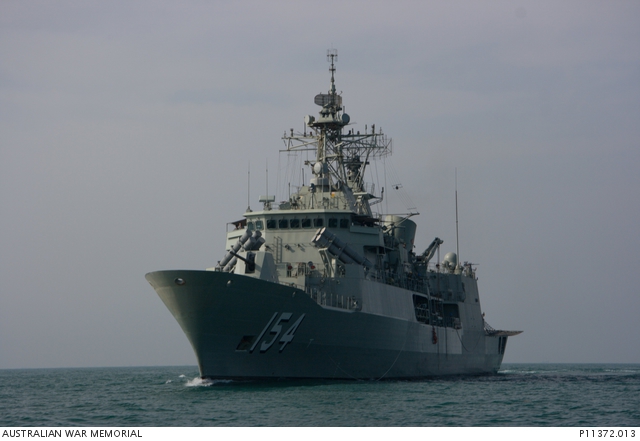
Before I came to UTS I was working at the Australian War Memorial. In late 2008 I visited Iraq and the Northern Arabian Gulf area for the Memorial, collecting and recording records of war before all Australian forces were withdrawn. This post from the AWM website explains:

Recently I was advised by a former colleague that some of the photos I took (including the image above) are now available on the AWM website (which means they’ve finally cleared security):
James B. Hunt Jr. Library, NCSU


Hunt Library, NCSU, a set on Flickr.
Via Flickr:
Here is a large set of images from the new James B. Hunt Jr Library at North Carolina State University (NCSU).
I was fortunate enough to attend the second Designing Libraries Conference that was held this year in the Hunt Library. It was massively over-subscribed by librarians from all over North America and various parts of the rest of the world, such is its reputation already.
There are some duplicates in this set (high & low res versions) because I had uploaded many in low res format whilst travelling. I’ve tried to add some explanatory text to the most significant images as well as titles and tags. If you’re confused or really interested in something just leave a comment in Flickr.
Please have a decent look as I think they’ve really done a brilliant job.
The library is a credit to the vision of Susan K. Nutter (Vice Provost and Director) and her staff, the architects Snøhetta & Clark Nexsen and the design team.
And for those of you too lazy to look through all those images on Flickr, here is a slide show set to the Cillo remix of Bon Iver’s Calgary:
A comment on my work blog asked for information about how spaces in the Hunt Library (or our own future library) relate to teaching, learning and research strategies. Rather than just reply directly I thought I would put some additional information in this blog post along those lines. Thanks to my colleagues Belinda, Sally and Beth who provided comment and suggestions on all of this. So here it is, mind the step …
One of the most impressive aspects of the Hunt Library is how it has been planned with the broader university mission in mind, and encapsulates the aspirations of NCSU. As a research-intensive, technology University, NCSU’s mission and goal statement is not so different to ours at UTS:
As a research-extensive land-grant university, North Carolina State University is dedicated to excellent teaching, the creation and application of knowledge, and engagement with public and private partners. By uniting our strength in science and technology with a commitment to excellence in a comprehensive range of disciplines, NC State promotes an integrated approach to problem solving that transforms lives and provides leadership for social, economic, and technological development across North Carolina and around the world.
Its aspirational vision statement is also similar to ours:
NC State University will emerge as a preeminent technological research university recognized around the globe for its innovative education and research addressing the grand challenges of society.
As the gateway to knowledge for NCSU and its partners, the NCSU’s libraries play an important role in achieving this vision.
Hunt Library is one of two main libraries on campus, and is described as the face of NCSU in the 21st century, a space that expands the frontiers of learning and research. To enhance innovative learning and teaching practices, Hunt provides a place for students to connect to peers, faculty and researchers across disciplines, work with tools that erase distance and promote collaboration, access world-class research collections, showcase their work in digital and physical displays, and explore new technologies that encourage and enable the creation of games, films and music, and working with “big data”, 3D models or prototypes. It is also a space designed to inspire and elevate; encouraging creativity, curiosity and the pursuit of new knowledge through the quality of the building’s design and finish, the ubiquity of accessible technology, the thoughtful inclusion of collections, scholarly reading rooms and exhibition spaces throughout the building, and a program of cultural events and displays.
For other members of the NCSU community, including faculty, researchers and industry partners, purpose-designed, technology-enriched spaces enhance their teaching, research and scholarly activities in line with the NCSU vision to be a leading technological research university and an innovation centre for their region driving economic and social benefits.
These are achievements we think our future library should aspire to in order to support our own strategies for learning and research.
Fortunately we have a strong basis to build a library that furthers the UTS vision to be a world-leading university of technology and provides a competitive advantage for UTS. Like Hunt Library, our Library Retrieval System (LRS), will free library space from housing our entire collection of print material, enabling expanded spaces for a full range of scholarly activities, while keeping the collection easily accessible. Looking to the successful example of Hunt, the types of spaces we will provide should include:
- a variety of individual and group study spaces from quiet individual study to group study spaces that account for different learning needs and individual preferences;
- ample power, data and wifi to cater for current and future technology;
- incubator spaces for exploring new technologies;
- digital media editing and production facilities;
- sophisticated areas for creating simulations and virtual environments;
- gaming spaces for the scholarly study of games;
- panoramic (digital) displays to showcase academic and student work;
- makerspaces for model making; and
- spaces for special collections and exhibitions that provide exposure to culture and inspiration.
Importantly and in addition to the spaces and technologies in their libraries, both NCSU and UTS libraries provide services that enable the success of their students and support researchers including:
- improved information discovery through online catalogue search and discovery tools;
- online reference, interlibrary loan, access to 7.2 million shared books available on request through Bonus+;
- open and closed reserve services for all required textbooks and 24 hour access to electronic reserves;
- online guides to library resources for all faculties;
- lending services for technologies such as laptops, tablets and e-readers;
- Copyright and eScholarship services, collaborating with scholars on digital publications, our digital repository, IP/Copyright issues and our Open Access press – UTS ePress;
- extensive data support services providing advice (via training sessions and consultations) on data management planning, discovery, description, sharing and preservation;
- research support services from specialist librarians who have experience in searching for resources in particular fields;
- training and instructional support, from literature review to navigating subject specific databases and also advice on how to find, use and attribute unrestricted resources such as images, film and media; and
- tailored information literacy programs from orienting new students to expert researchers, – including workshops, video tutorials or games such as treasure or scavenger hunts.
We see that a future library like Hunt can create a new heart for our redeveloped campus that helps form a hub of creative collaboration between students, academic staff, researchers and industry partners. Just as Hunt Library has done, our future library could become the University’s intellectual, cultural and social centre. The future library should promote learning and knowledge creation, enable experimentation, support innovative projects and partnerships and showcase UTS research and scholarship, providing inspiration for our current and future students. It should complement other campus redevelopment projects that breathe life into the aspirations of our University.
 FromMelbin