
Category: Uncategorized
Google Wave
Over the weekend I was reminded by a Tweet from a colleague of the importance of Google’s demo late last week of Wave: quite possibly the future of communications on the web. It has been developed right here in Sydney too.
A reliable report comes from Tim O’Reilly and you can read that here. I know that sometimes it is hard to stay up to date with information management technology as new web developments are happening so fast, but it is important and for those of us in libraries I believe it is part of our professional obligation.
Wave seems like a pretty interesting, maybe even exciting development but perhaps the thing I found most interesting in reading Tim’s post was a not-so-related comment a long way down that came about because Tim made reference to a book (Practical Internet Groupware) that he had published online. Someone has a go at Tim for making the book available online behind a “paywall” (i.e. not for free). Tim elegantly and gently reminds us that not everything on the Web can and should be for free. He makes two very wise statements:
It’s urgent for the future of publishing for there to be economic models for digital publishing, or you will find yourself poorer, not richer, as a result.
And:
I’m all for free content when people can make it work, and all for paid content when that’s the only way to make good things happen. You pick the hat to fit the head.
Our goal should be the creation of maximum value to society. Sometimes free creates more value, and sometimes paid creates more value. The smart person, and the smart company, knows how to use both.
Sometimes with blog posts the most interesting and sometimes even the most intellectual debate happens in the comments field and that is part of the real beauty of the social web. That kind of thing doesn’t happen in traditional academic publications.
Web 3.0 & blogging less, Twittering more
Yeah, been blogging less and Twittering more recently. Sorry. Actually, that is not really true as I’ve been pretty active in putting up content that I want our staff to be aware of on our internal staff online forum at work. So, why Web 3.0? Well it has been a bit of a concern to me of late as we begin contemplating our future as a university library over the next decade. Do we really understand where the Web is heading and what our role might be?
So, just today via the Twitter stream (because I didn’t even have the time to plough through Google Reader) I found what I think is a great presentation from Richard MacManus of ReadWriteWeb:
Web 3.0 or Not, There’s Something Different About 2009
Here is what I got out of it regarding some aspects of Web 3.0 that are appearing already:
- from read/write web to provision of more web services
- smarter web – personalised, filters (Facebook & FriendFeed) & recommendations
- more mobile applications and services (like IPTV)
- more openness
- Twitter as an indicator – real time web?
- Google evolving by offering improved core search
I reckon Richard’s slides are a quick and easy-to-understand introduction to the “concept” of Web 3.0. I even felt moved to comment on Richard’s post, saying that at UTS we have: started moving on a mobile presence for the Library’s website; we’re looking at how we can personalise our web interface and provide improved filters/recommendations; we’re doing more real-time online service by using Meebo (now) and Twitter (soon); and we’re enhancing & extending the search interface for our “catalogue”. Richard’s post and presentation ties in well to the other recent useful writings of people like Greg Boutin. More people need to read this now!
Actually, while we are on this future library topic, I also think it is a good idea to read The gathering storm on the future of academic libraries from Mark Dahl of Lewis & Clark College in the US. It focuses on the impact cloud computing will have on higher education libraries.
Most of us will find slides 7-9 challenging, and I hasten to add that there is certainly no agenda to down-size the UTS Library. We do, however, need to focus more on creative value-adding if we are to stay relevant. Slides 17-24 are really the message I liked and I think they are good advice for our future.
I also came across this article via his blog (synthesize-specialize-mobilize). It sums up his thoughts about the future of our uni-library search & discovery systems (i.e. Endeca for us). A good quote from the article is:
The challenge of technology and metadata professionals will move from managing a library’s own set of isolated databases to managing their library’s imprint on shared global discovery platforms.
His blog is probably a good one to follow.
Can Sydney Surf the Digital Sunami?
These are my (rough) notes from a UTS Speaks presentation by Professor Tom Barker, 31 March 2009.
This is the second talk by Tom Barker that I’ve attended since joining UTS about 10 minutes ago. I am now beginning to understand more about his passion for “digital urbanism”.
Interestingly, the first thing I noticed in the University’s Great Hall was that the audience began and then continued to sit on the left hand side, in front of the screen that would carry his PowerPoint slides, not in front of Tom himself. What does that alone say about our preferred means of consuming information? Do we attach any importance to facial expression at all? Do we just ignore it and place it further down our list of priorities than whatever is served up on a screen? I just did what everyone else was doing: baaa, baaaaa.
Again, Tom started his talk with a movie clip, this time from Matrix, which featured the Sydney CBD. It was the segment that asked “what is real?”
Tom posed a few concepts that might be taken up once we are over the current credit crunch. He is all about creativity and innovation and he thinks that the new creative industries are now more resilient than many others and should survive the crunch pretty well. He also thinks Australia is well-positioned to be more “e-ready” than most of its neighbours, especially within our cultural environment. We do, however, lack decent Government policy and vision (compared with others like the UK and NZ), and business/consumer adoption. So let’s look at his concepts, many of which have some relevance to our future library (hence its place in the Forums):
e-with everything
Here he referred us to a newly proposed environment in Singapore which has been designed for new creative businesses, working from home, new office spaces, new business districts, etc. It would become a hub of work, living and entertainment in one environment, mixing green spaces with business, office, residential, industrial and entertainment uses. The e-uses are no longer a separate community or space, they are integrated with everything else we do and everywhere we go.
He also described “intelligence” as our ability to adapt to different and changing circumstances.
giant clouds
Here he referred to computing clouds; creative collaboration that harnesses and exploits the power of enormous networks. They offer a tool for collaborative working. He said that the first big city to offer such a cloud will steal the march on all of the others.
global universities
Apparently we are not there yet and there is much further to go, but a start has been made (I thought about MIT and their use of DSpace here). He said that hierarchies simply do not work and that it all depends on connectivity, eg. EVO. Connections can be made and exploited in many ways, eg. the joint lectures currently being facilitated between UTS and RMIT. Student and post-graduate travel was also important in this light and he referred to a UK program where students are helping facilitate e-commerce ventures in under-developed Ghana.
He also introduced a “creativity rose” which I think he suggested using to measure the success of such ventures: the four points on the rose being economic, creative, social welfare and knowledge benefits.
banks 2.0 – try again
He showed a graphic in which Australian banks were compared to the size and value of major Western banks. The Australian banks had retained more of their pre-crash value than many well known US and UK banks which had suffered heavily from collapsed current values.
He introduced a rather radical concept of banks “trading” in currencies other than traditional stores of value (like money). Again, he mentioned a conceptual idea for the future use of London’s derelict Battersea Power Station. Tom seems particularly keen on a proposal to set it up as the new home for the British Library (which is running out of space). But it would become much more than that, by becoming a “bank of culture”, moving the British Library and the British cultural digital space into it. (This idea is in many ways similar to what we want to do with the new UTS library of the future next to the tower.) So, the new British Library plus new media and creative industries would become a bank of culture; a trading bank with its currency being “creativity”. Perhaps we could apply a similar concept to the new UTS Library, our currency being knowledge?
gen-z kids
These guys are now under 16 years of age (so they are the clients of the library of the future). They are characterised by:
- continual partial attention (multi-tasking);
- always online or connected (but not always paying attention to any one feed);
a social conscience; - an environmental conscience and awareness;
- (something about the structure of their life, which I didn’t get fully); and
- they are the first generation who have had parents completely familiar with web technologies.
“lymphatic systems”
These systems are important for waste disposal, energy and disease resistance. For the digital world I think he said something like “these systems are integrating when they are working and regenerating when they are not (starting from scratch)”, but I’m not sure I completely caught his meaning here. He cited the London Eye and Melbourne’s Federation Square as good public “urban” squares or spaces, but Sydney apparently has nothing like this in the open . . . yet. Another example is Berlin’s amazing Potsdamer Platz. He said that in these spaces, technology (screens made of pixels) was being used to bring the spaces alive and to make them interactive, particularly after hours. He showed an example of SmartSlab technology that will be used to broadcast live media for 40-50 UK public spaces.
outdoor media
He referred to the progression of broadcast outdoor media from simple live broadcast, to living media, to “autonomous pixels”, and finally to intelligent media (which is pro-active). UTS is involved in an autonomous pixels project for the Sydney Light Festival in May which will attempt to display uploaded facial expressions. I think their “face” will hang somewhere in the Rocks area. People will MMS photos of their face to the system and I think they will then be accumulated to show different expressions. The screen is made of pixels which are spherical, solar-powered eggs and the face itself will be shown in semi-3D. The same technology can provide a more interactive “2nd skin” for construction sites, so UTS could again lead in the use of such technology during its campus redevelopment.
Such technology is “esemplastic”, a word coined by S.T. Coleridge to convey the ability to shape diverse elements or concepts into a unified whole. (I once witnessed some amazing British minds doing this in the UK Cabinet Office, preparing complex intelligence briefs for the UK PM, but that is a whole other story.) This would be a worthy aim for the library of the future.
“beaches”
No, not Barbara & Bette. This section was his environmental and sustainability component. Energy is obviously a valuable commodity. Construction costs are also rising with the cost of production materials, but the cost of of digital pixels has fallen (recently) by over 95% and when used to provide digital lighting he said it was 90% more efficient than other forms of lighting. So, for Tom, the Internet has better environmental credentials. The downside of the Internet is that most people involved in it still do a lot more flying around the globe to make projects happen.
summing up
Tom said he was most interested in facilitating the ability for individuals to be collaboratively creative. He referred to the Renaissance model of the patron, master and apprentice as a good model for us to follow too. He spoke of technology as part of the urban fabric as opposed to a device we must attach to it. It has the potential to be more inclusive and therefore, accessibility issues should be able to be addressed. Its downsides can be balanced.
About metadata
This post by Jon from Metadata Matters explains it all. Pretty well. You just need to read it. If you can’t read it all, at least read his last paragraph:
Let it go. Chaos is good. Keep your systems open and flexible. Watch. Listen. Integrate instead of compete with Google. Integrate data from the social networks. Share everything. Aggregate. Watch. Listen.
He is writing about the search for agreement on a few data standards or formats. It isn’t going to happen, so let’s give up and move on.
Delighting or going beyond the ordinary: the ACO, Cedric Price, and SXSW
Anyone guessed what this is about yet? I often get a head full of new and somewhat confused ideas at ACO concerts and Saturday night at the Angel Place Recital Hall in Sydney was no exception. Well, actually it was in a way because I enjoyed the whole program and we were given two amazing encores. It was also the third in a series of experiences that I’d had in one week in which the underlying theme was delighting an audience.
Maybe I should start again at the beginning. That was going to a public lecture one evening this week by Tom Baker (who has never been a Dr Who to my knowledge) who is now Professor of Innovation, Design and Architecture in the Faculty of Design Architecture and Building at UTS. There, in a fast-paced review of digital urbanism (the melding of the physical and virtual [cyber] worlds), he spoke quite a bit about the role architecture and design has today in providing extraordinary experiences for people in our cities by designing buildings, urban environments and dwellings that while being functional and efficient (from a use and energy consumption perspective) also delight us. It seems that one of his inspirations in this field was Cedric Price. Tom introduced us to even more exciting ideas that we might be able to use on and within our new library building such as energy saving initiatives, creation of a community space, using large digital media screens on the outside of the building, etc. Maybe we should ask him to talk to us specifically about what might be feasible for our new library?
Next came reading a blog post by Jeremy Keith (the web developer and microformats advocate from the UK) about his recent attendance at the recent SXSW Interactive. His most recent post is a great review of what he saw and heard at SXSW for those of us who could not attend. What caught my eye was his reference to a talk by a colleague of his (Paul Annett: Clearleft’s visual designer) about putting “the delighters” back into web design. What a fantastic concept! So I went over to Paul’s blog hoping to find out more and he described his talk as being about “putting delightful and entertaining niceties into the websites you design”. The talk was titled something like “Oooh, that’s clever! (unnatural experiments in web design)”. He continues:
Find inspiration for innovation. See technological quirks as opportunities. Try something previously unheard of with your site design. Laugh in the face of convention. Use and abuse CSS in ways never before imagined. Get away with it. And if it doesn’t work, try something else instead.
I think that is brilliant, and not just for website design. So when I read that, having heard about him only a couple of days ago, I was immediately reminded of Cedric Price. But wait, there’s more, my journey continues . . .
For some years (nearly 10?) I’ve subscribed to the ACO series of concerts in my former home town of Canberra. But late last year I was really lucky to be offered a new job at UTS in Sydney. For those who don’t understand “lucky”: no more war; no more Canberra. I’d had enough of both. There are small patches of delight in Canberra, but there are not enough (for me anyway), I’d seen them all and they don’t change or grow much. I’ll miss some people, but that is about it. So what was I to do with my 2009 subscription? I’m not sure yet, but as my music friends are away in South America, I managed to swap my ticket to go to the brilliant Inner Voices concert given by the ACO under guest conductor and Finnish violinist Pekka Kuusisto at Angel Place. The members of the orchestra play so well under Pekka that I believe he is probably penciled in as the next artistic director should Richard Tognetti, who this year celebrates 20 years as the ACO’s artistic director, ever move on. The music of Sibelius, Bach, Andrew Ford and Timo Alkotila wasn’t at all ordinary and the whole performance was a real delight. Pekka began the night with a warm and humorous welcome for one of the composers, Andrew Ford, who was in the audience. (Bach and Sibelius were not there: I checked.)
Under Richard Tognetti the ACO plays with an infectious enthusiasm, especially for new chamber music and with guest performers. They do the same under Pekka. And I’ve seen it before when he was out here last time. Pekka plays glorious music and he isn’t afraid to flaunt his obvious love of Finnish folk music and a long Finnish fiddling tradition. That alone probably horrifies some of his chamber music audiences, but it delights me. Like a skilled ballet dancer, he makes his playing look both graceful and easy.
So what does all this mean for me? Well, I’ve moved out of the museum and the strictly-cultural sector into a university library and I’m not yet completely sure, but would it be a bad thing if we all tried to delight our users occasionally? (Maybe we already do and I’ve witnessed some people doing just that on the client service desks in the Blake and Kuringai libraries.) Soon we are to build a library of the future on Broadway and maybe that new building will do it. Perhaps, as the university’s cultural hub, it could have one of those really cool small performance spaces that well known artists ask us to perform in? Maybe it will also be a bit of a showpiece for digital urbanism, alerting and showcasing what goes on inside the building on some of its external surfaces? Nevertheless, as we begin planning for it this year, I think that aiming to delight our clients, to laugh in the face of convention and to provide an extraordinary service in that library are decent and worthwhile objectives.
That’s all!
ALIA Presentation from io2009

Information Online 2009: some observations


This isn’t going to be comprehensive. It is just a few observations that I came away with from Information Online 2009. As I gave a pre-conference workshop and a keynote address, I think it is probably up to others to make more detailed observations. I believe that my keynote address has been recorded and will eventually be podcast somewhere, so I’ll link to that when I read about it. The photos used above (by Neerav Bhatt) are some of the more interesting slides that I used in my presentation.
I was a tad annoyed that many in the audience got hooked up about a minor point that I made. I said that we should not obsess so much about metadata. I think we’ve talked and debated so much about it for so long now (with very little real progress) that we just need to start making other things happen without waiting for it to be “perfected”. It is I believe, with Copyright and “stakeholder consultation”, used as an excuse not to progress things. If Flickr, Google, Amazon or iTunes had waited for us to agree on a schema they’d still not exist. I said a lot of other things, but all the metadata crusaders got hooked up on that wee point and missed all of the others. Typical.
A number of points I made and that were also made by Paul Hagon of NLA and happiness guru Liz Lawley were later re-inforced in other keynotes by Laura Campbell of the Library of Congress and the futurist, Andy Hines. (I’m very glad that we didn’t have to listen to anyone banging on about a new management theory from their recent MBA.)
I took some rough notes at Laura’s keynote address:
Keynote 21 January 2008 – Strategic Directions and Initiatives (on the Library of Congress’ last 20 years)
Strategies
1. Increasing access – American Memory, Thomas (workings of Congress) & their Learning Page – to general public and education audience (this to me was quite similar to our history in opening and broadening public access at the AWM, albeit on a smaller scale). They, like us needed to broaden access to be relevant. They have 110 million online users and 2 million onsite users (we have about 850,000 visitors).
2. Expanded offerings to new channels: embracing new partners & new sectors. Global Gateway – vast foreign collections. eg. the national newspaper program. Can search 1,000s of newspapers. 1 mill online now(?). Flickr Commons pilot – 3,000 images offered (Depression photos) – 10.4 million views in a few months – inviting user annotations and descriptions – all captured. Viewership up. They also arrangement with You Tube.
3. Networks – NDIIPP & WDL – changing work in the future:
- National Preservation Program (NDIIPP) – $100m in 2000. Guided by NDSA Board (all 27 of them). The Preserving Digital Heritage report in 2002 mapped out strategy for distributed network of trusted partners (never to be centralised). Goals – included at-risk content, identification of tools & partners, developing a strategy. 130 partners because even LoC can’t collect everything. Infrastructure addressed to share content. Had eight consortia groups for geospatial, political business/economics, cultural, public & social services data. They have 70 Tb of data. Partners include: universities, broadcasters, commercial enterprises, states, federal agencies, new businesses, tech companies, and other national libraries. Also IIPC – the international internet preservation consortium. 37 member libraries working on this now. they resisted temptation to start with by-laws and got on with accomplishing it. A sensible way to move forward. Now have 248 Tb and they are expecting 650 Tb by 2013. Laura: “Taking early action allows you to learn by doing!”. She also put up a slide about them being catalytic, collaborative, engaging multiple platforms, leveraged networks, shared resources.
- WDL – prototype launched with UNESCO a couple of years ago. No “show-runners” – all their own content. 25 partners now. You can browse by locations, type, time, institution, etc. – for books, manuscripts, maps photos, film and sound (more audiovisual than anything else); heaps of intelligent search (via annotations, curator videos, etc.); multi-lingual (translator services). Memory packages are available. They’ve set up a mirror site at Alexandria. See their online concept video (it is pretty good). (Prototype and Concept videos available here.)
Final comments from Laura: it is not the technology that is the hard part, it is the human element. That will never change. She also mentioned making choices about what work you are in. She said her early work at the LoC was “triage”, then pushing out content, and now building on all of that and embracing networks, and solutions. They did consult some wise gurus about the future to learn about the driving forces of the future. “Creative collaboration is the key to future invention and innovation.” Not a perfect story, but a lot to be said for real collaboration – not easy, but a lot to be said for it when it works.
I didn’t take many other notes that I can pass on right now. I took some notes from Andy Hines’ presentation, but left them at home today on another laptop.
I did like what the State Library of Victoria is doing to connect with students, principally using their Inside a Dog website. Great stuff.
Oh, I almost forgot: Libraries Australia (courtesy of Paul Hagon) have now started their own Ning site, so check it out.
A pause in blogging
Yes, sorry. I spent much of November away in Iraq and the Northern Arabian Gulf on a curatorial/collecting visit with some elements of our defence forces. It is the first time the Australian War Memorial has ever sent an archivist/librarian to a war zone and only our second curatorial visit since the Second World War. I took about 2,000 photographs for our collection, gathered a lot of donations, recorded (digitally, using Audacity) about 30 oral history interviews, and identified some records and items we were interested in for our collection (post-deployment).
Since that time I’ve not been entirely sure about what details or images I can actually use in my blog. I certainly didn’t want to compromise the security of any of our forces still deployed overseas. It is a bit frustrating because I think their role and the good work they are doing is not well understood, particularly by the Australian public, but there it is.
Then, in December I heard that I’d won a new job at the University of Technology in Sydney. That too wasn’t public knowledge until more recently, so I couldn’t really say much about it until UTS had made a staff announcement.
It has been a really busy time for me as over the Xmas period I really needed to catalogue all of the photos that I am leaving in our collection and I had to prepare a workshop on the management of digitisation projects and a keynote address for Information Online in Sydney.
I hope to get back to posting more on this blog as things settle down, including me, in Sydney, soon.
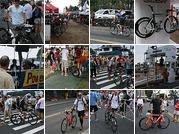
Images from Ironman 2008
Images on Flickr from Hawaii. I’m hoping to upload more progressively after the race.
The story breaks

James Nachtwey: Photojournalist
Photojournalist James Nachtwey is considered by many to be the greatest war photographer of recent decades. He has covered conflicts and major social issues in more than 30 countries.
He is the winner of the 2007 TED Prize, awarding him $100,000 and one wish to change the world. This was his wish: “I’m working on a story that the world needs to know about. I wish for you to help me break it in a way that provides spectacular proof of the power of news photography in the digital age.”
James Nachtwey’s Homepage: www.jamesnachtwey.com
 FromMelbin